
I. General Information
School Name: E.J. Dunn Elementary School
School District: SD#70 Pacific Rim
Inquiry Team Members: Jennifer Preedy jpreedy@sd70.bc.ca, Rachel Reynolds rreynolds@sd70.bc.ca
Inquiry Team Contact Email: jpreedy@sd70.bc.ca
II. Inquiry Project Information
Type of Inquiry: NOIIE Case Study
Grade Levels Addressed Through Inquiry: Primary (K-3), Intermediate (4-7)
Curricular Areas Addressed: Language Arts – Oral Language, Language Arts – Reading, Other: Indigenous Education
Focus Addressed: Local Indigenous Knowledges, Literacy, Core competencies (for example, thinking, communication, personal and social)
In one sentence, what was your focus for the year? Our focus for the year was to find out if using the strategy of Reader’s Theatre (Indigenous oral storytelling focus) would help improve reading fluency, speaking and listening skills, and Indigenous cultural knowledge for our students.
III. Spirals of Inquiry Details
Scanning: Our scanning process began by closely looking at our groups of learners. We proposed the two key questions, as well as other questions, to our learners. We applied the First Peoples Principles of learning by highlighting the role of Indigenous learning. We really wanted to know what the students already knew and what they wanted to know. We wanted students to really reflect on what they wanted to learn and why this was important to them.
We learned by the questions we asked the students that cultural knowledge was very important to them. Some wanted to feel more connected to who they were and where they came from. We also learned that a lot of the students really enjoyed stories and wanted to be a part of Reader’s Theatre.
Focus: We chose this area because we saw how a lot of the students really liked to share. We also noted that although they liked to share, listening was not a strong skill for many of them. Many of them enjoyed books and reading, but struggled with reading fluency. We were hoping that being engaged with Reader’s Theatre would be an enjoyable way for them to practice speaking and listening. We also wanted them to gain knowledge regarding the importance of oral storytelling to the Indigenous culture.
Hunch: Our hunches were that students needed more opportunity to read out loud, and more importantly, more enjoyable opportunities. We also recognized that most needed to improve their listening skills as well. We also had a hunch that although some students had some general knowledge, they really didn’t know a lot about Indigenous culture. Although they had specific lessons in earlier grades, they still needed a lot more exposure to oral storytelling.
New Professional Learning: We both explored learning more about local Indigenous language and culture. We read books on oral speaking strategies and ways to implement Reader’s Theatre for students, but what was most helpful was our Indigenous support team in our district. We were able to obtain Indigenous stories that we rewrote with permission into Reader’s Theatre format. We also were fortunate enough to have an Elder from the community come in and spend an afternoon with our students. This experience was rich and provided a lot of interesting history.
Taking Action: We began our inquiry by surveying the students with several questions. After reading these over, we were able to focus in a little better. The first strategy we implemented was sharing some history on Indigenous story telling with the students. We discussed the role of oral story telling and why it was important. Next we immersed the students in stories. The students watched videos, were read to, and read on their own. After this we spent a lot of time practicing speaking and listening skills through partner and group activities and games. After an Elder’s visit, we began reading our first script. We then went on to read several more and performed our stories for other classes. Students also had mini lessons throughout focusing on different areas of Indigenous culture related to storytelling. During the course of the inquiry, students were given multiple opportunities to read scripts and also to respond and reflect on their learning. We ended our inquiry with a closing questionnaire.
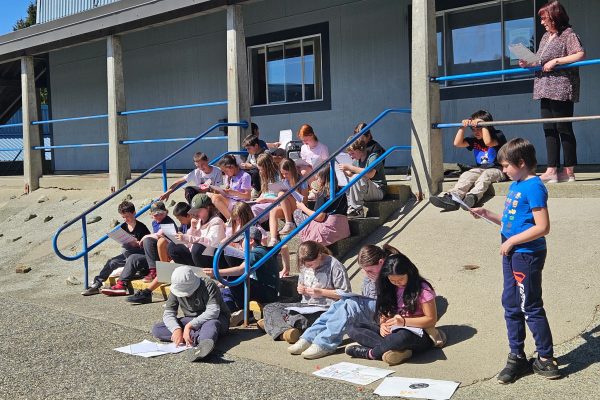
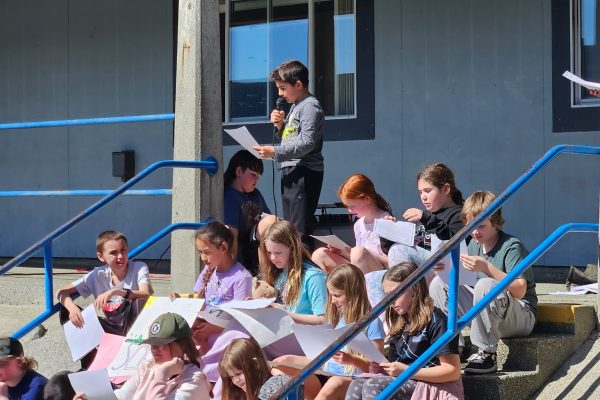
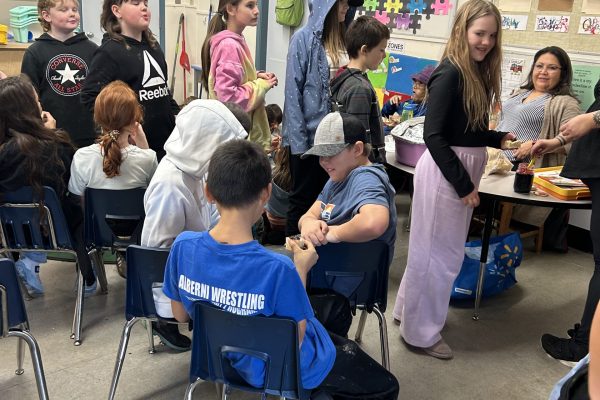
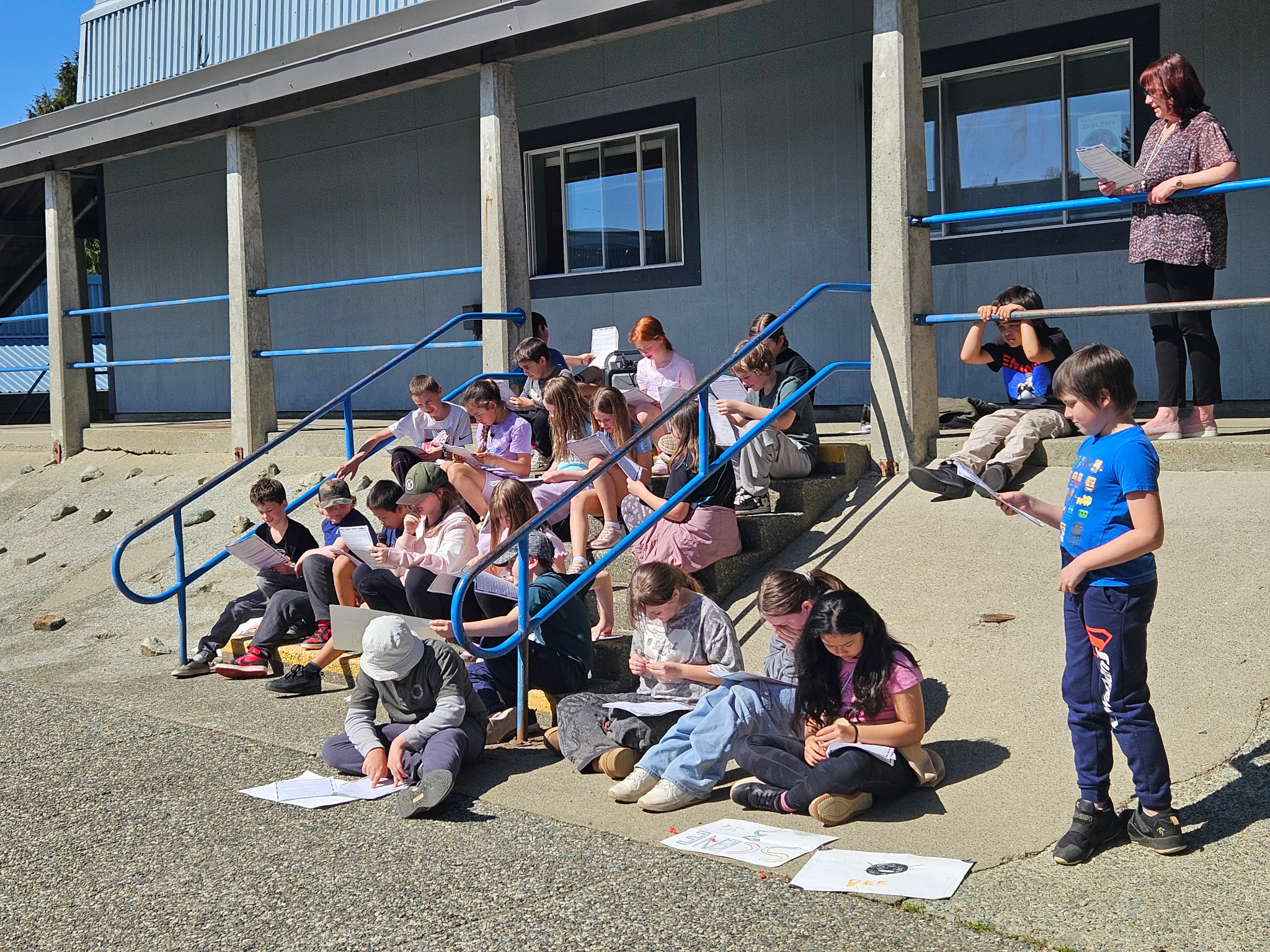
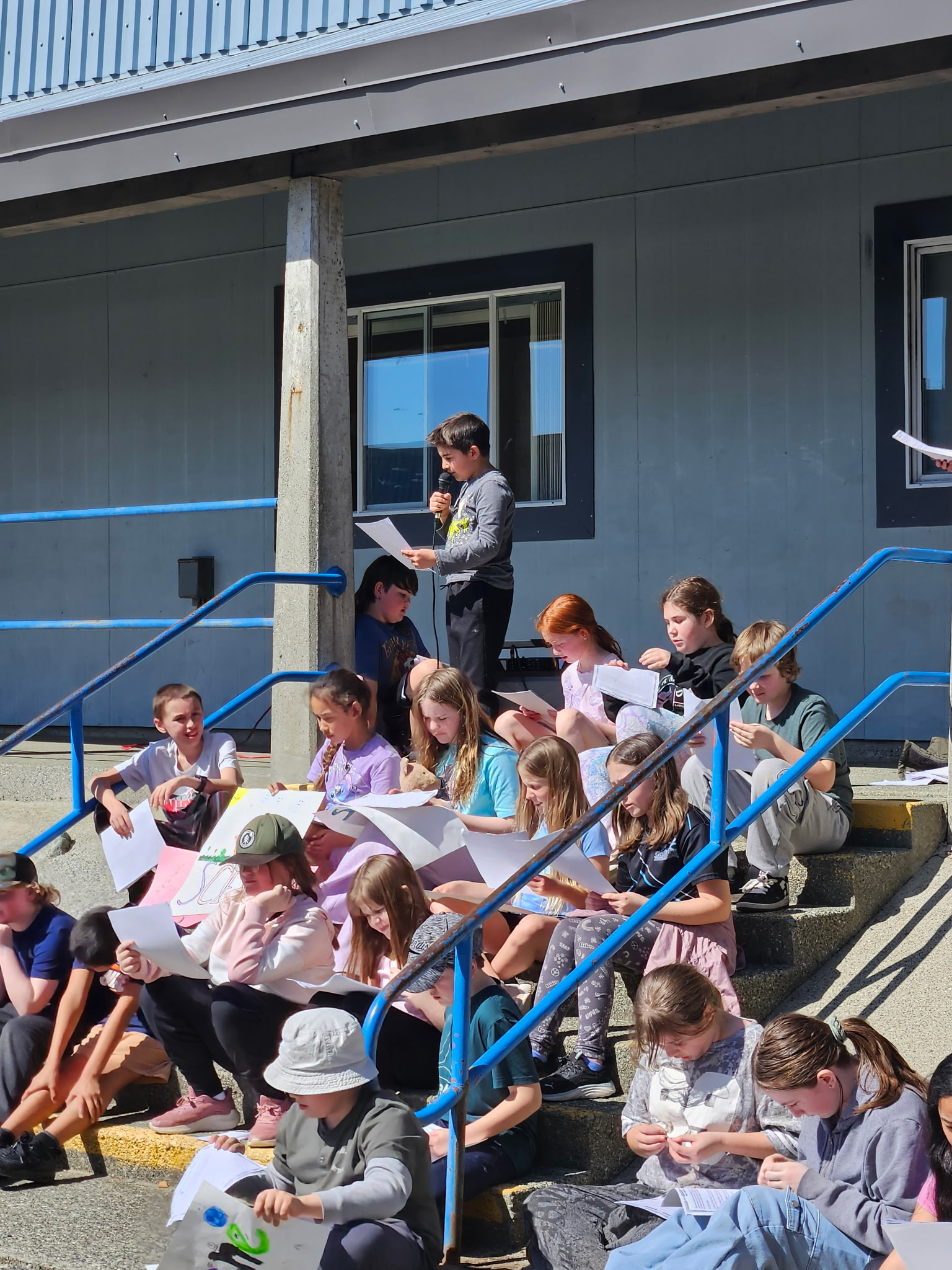
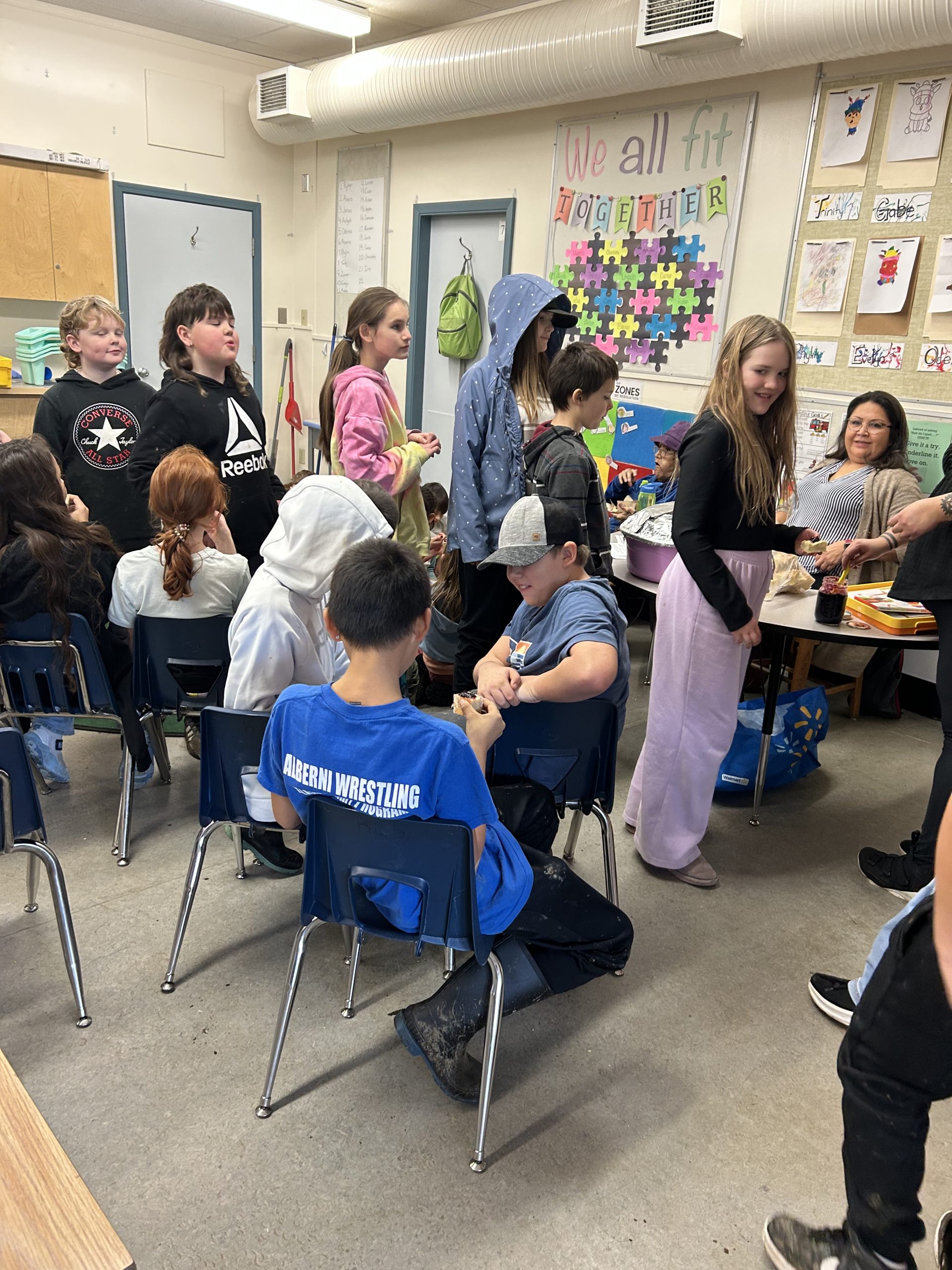
Here are some pictures of our Grade 5 class performing Reader’s Theatre to other classes at our school, as well as a picture of our 2 classes during an Elder’s visit about oral storytelling.
Checking: We both feel that we absolutely made a difference in moving the students’ learning forward. After multiple Reader’s Theatre presentations, students’ overall reading was a lot more fluent. A change we also noticed was how much better the students’ listening skills were during the performances. By being exposed to the importance of oral storytelling, students gained both knowledge and respect towards this. A closing questionnaire also confirmed the learning that had taken place. We are satisfied at this point, but have plans to continue our journey next year in this area and take our inquiry further.
Reflections/Advice: We learned how much students enjoy Reader’s Theatre. We learned that implementing this strategy is a great way to further students’ reading and listening skills. We absolutely encourage other schools in our district to use this strategy as well. To this end, we created a Reader’s Theatre book that we had bound and printed. We have already shared copies of this book with every other school in our district.
We plan to continue this inquiry next year.