
I. General Information
School Name: Learning Alternatives
School District: SD#68 Nanaimo-Ladysmith
Inquiry Team Members: Lacey Daly – lacey.daly@sd68.bc.ca
Trevor McIntyre – trevor.mcintyre@sd68.bc.ca
Brett Hancock – bhancock@sd68.bc.ca
Inquiry Team Contact Email: lacey.daly@sd68.bc.ca
II. Inquiry Project Information
Type of Inquiry: NOIIE Case Study
Grade Levels Addressed Through Inquiry: Secondary (8-12)
Curricular Areas Addressed: Applied Design, skills & Technology, Physical & Health Education
Focus Addressed: Land, Nature or Place-based learning, Self-regulation
In one sentence, what was your focus for the year? Our inquiry focused on enhancing the learning environment by creating an outdoor classroom and ensuring that it creates a welcoming and comfortable atmosphere.
III. Spirals of Inquiry Details
Scanning: During the scanning phase of the Spiral of Inquiry, our team focused on how students use and respond to different learning spaces, collecting their feedback about where they feel most comfortable and engaged. We asked questions like, “Are our learning spaces inviting and inclusive for everyone?” and “What environments make you feel supported in your learning?” From these conversations and observations, we discovered that students feel more at ease and ready to learn in spaces that are calming, welcoming, and connected to nature. As a result, we chose to prioritize the creation of an outdoor classroom and to improve the overall atmosphere of our school to build a stronger sense of belonging for all students.
Focus: We selected this focus area because we recognized that the physical environment plays a significant role in student well-being, sense of belonging, and engagement in learning. We hope that by creating an outdoor classroom and ensuring all school spaces feel welcoming and comfortable, students will feel more connected, calm, and ready to learn. Ultimately, we aim to create environments that support their academic success while also nurturing their mental, emotional, and cultural needs.
Hunch: Our hunch was that some of our current learning spaces may feel institutional, uninviting, or disconnected from students’ cultural and personal identities, which could be impacting their sense of comfort, safety, and engagement. We suspected that creating more welcoming, flexible, and nature-connected spaces would better support their learning, mental health, and overall well-being. We also believed that intentional design of spaces could foster a stronger sense of belonging for all students, especially those who may feel marginalized within traditional classroom environments.
New Professional Learning: We explored new areas of professional learning focused on designing inclusive and welcoming learning environments, with a particular emphasis on outdoor classrooms and culturally responsive spaces. Resources that were most helpful included The Third Teacher by OWP/P Architects for its practical design ideas, articles from Edutopia.org on learning space transformation, and Indigenous Education frameworks that emphasize connection to land and community. To support our colleagues’ learning, we facilitated collaborative design sessions, shared key readings and videos, and engaged staff in reflective discussions about how physical spaces impact student well-being and engagement.
Taking Action: To take action, our team co-designed the space with both students and teachers, ensuring their voices guided each decision. We began by cleaning and preparing the area to create a blank canvas for our vision. Together with students, we selected furniture and plants that would create a welcoming and comfortable atmosphere, prioritizing their needs and preferences. Finally, students and teachers worked side by side to build the furniture and set up the space, fostering a sense of ownership, community, and pride in the final result.
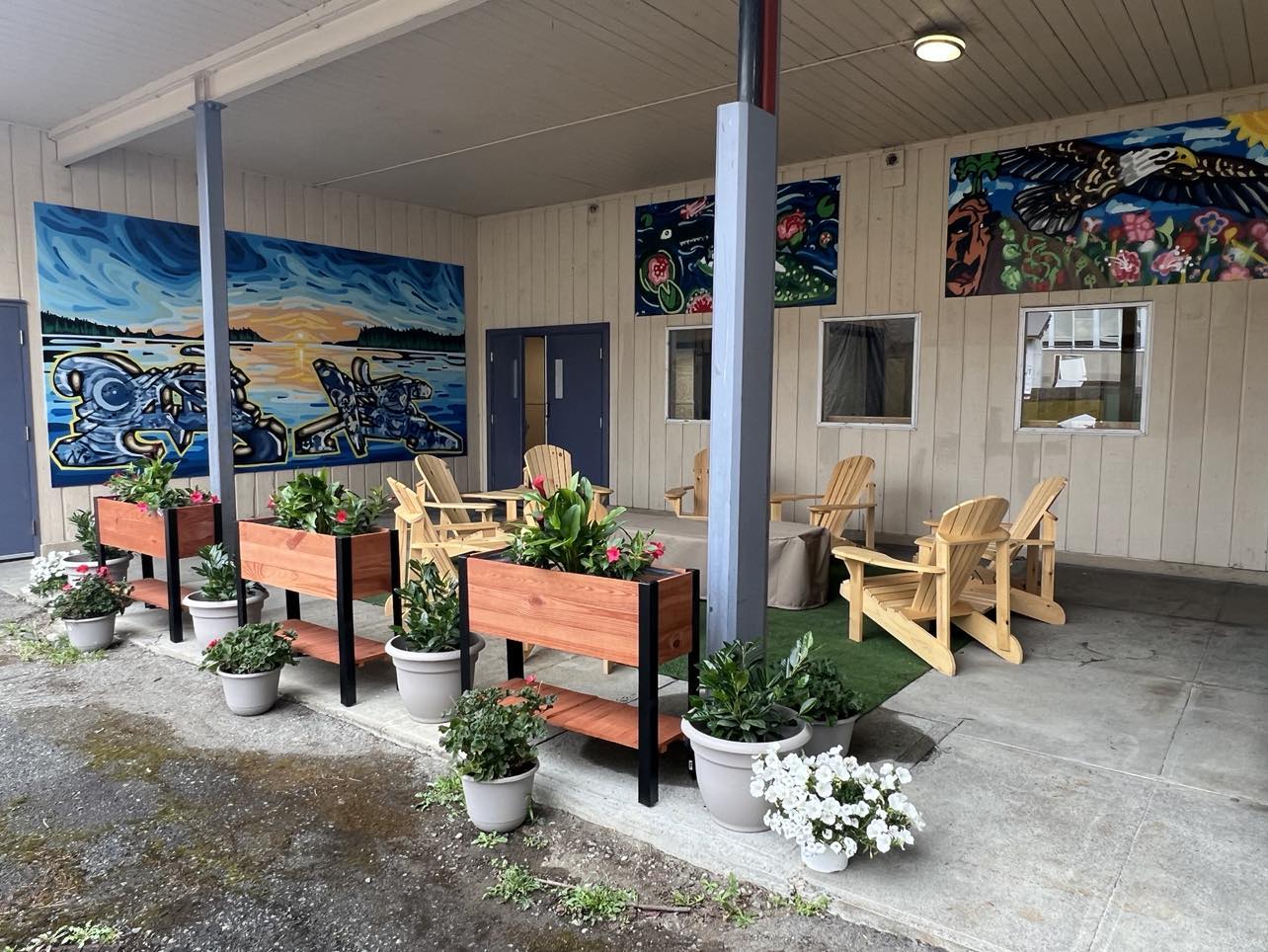
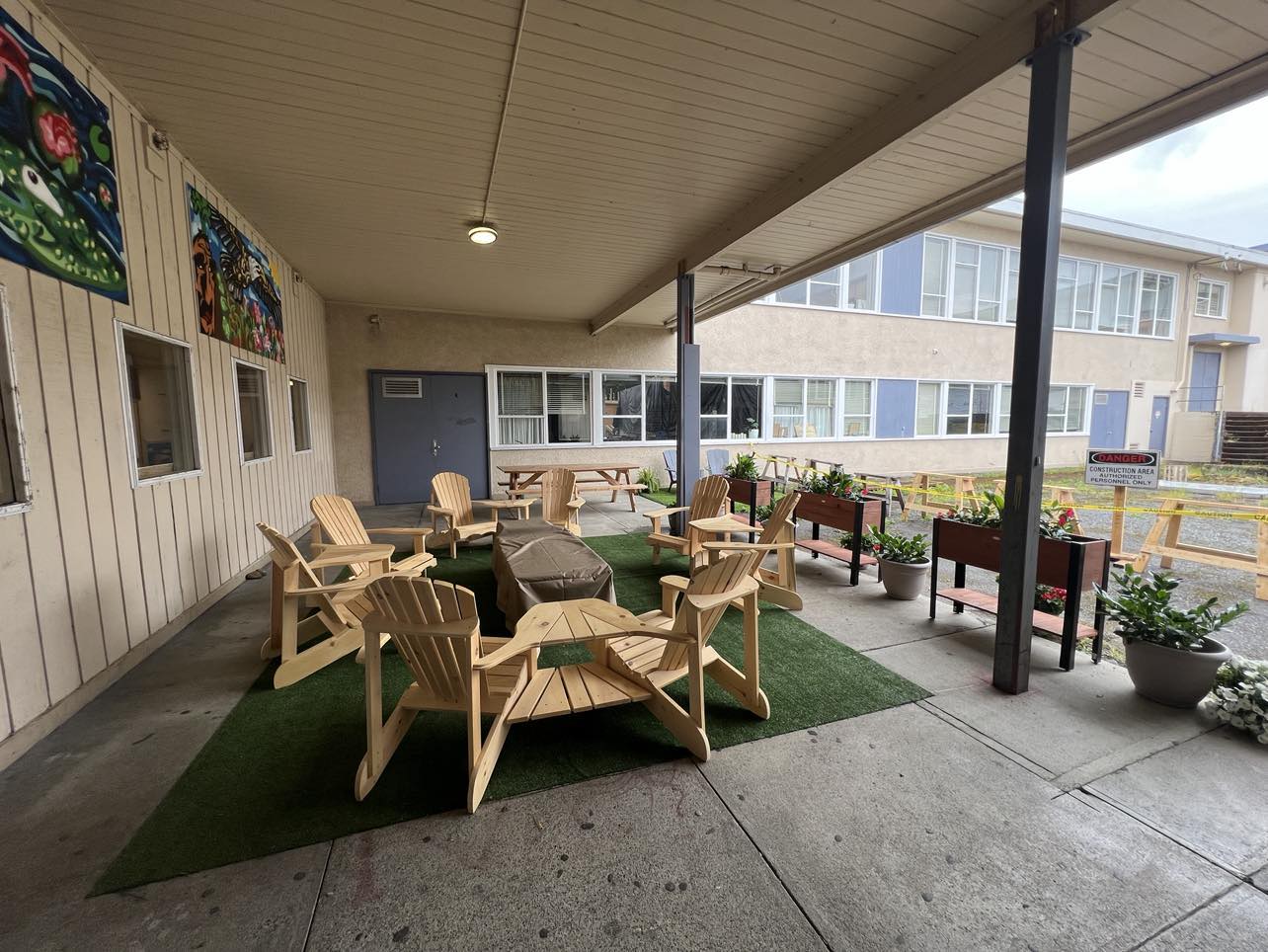
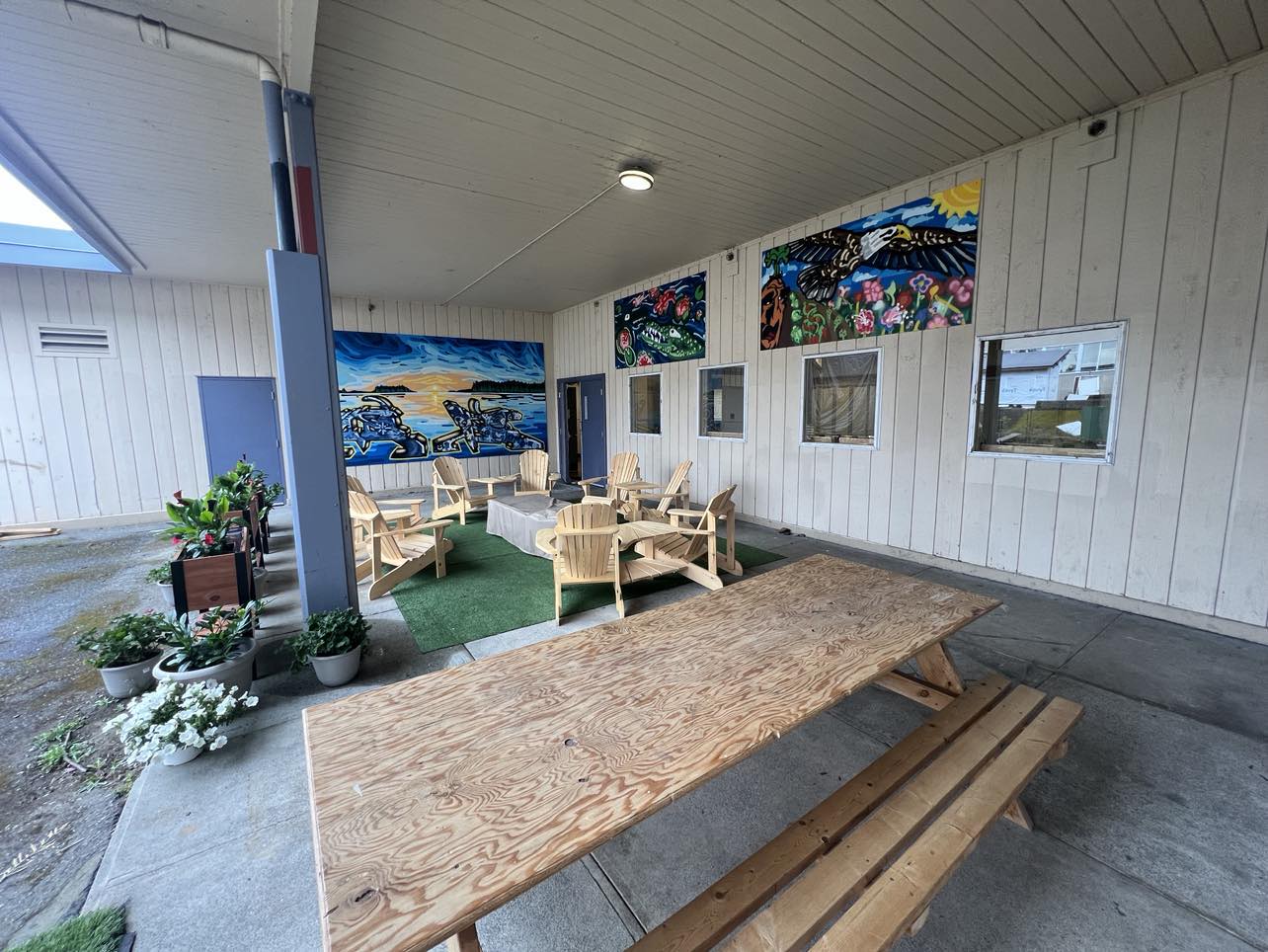
Photo Descriptions: These photos showcase the final product of our brand-new outdoor classroom. This beautiful and welcoming space was co-created by students and teachers working side by side. Together, they envisioned, planned, and built an environment that fosters connection, learning, and well-being. The space features comfortable Adirondack chairs arranged in a circle, centred around a covered fire table where classes can gather for warmth and conversation. Vibrant planter boxes and potted flowers line the area, bringing life, colour, and a sense of calm. The stunning murals add to the atmosphere, reflecting the land, culture, and creativity of our community. Because this area is fully covered, it can be used for learning, meetings, and gatherings for ten months of the year, rain or shine. It is a testament to what can be accomplished when we come together with a shared vision – creating spaces that support belonging, inspiration, and growth. Click on image to enlarge.
Checking: Because the creation of the space took several months, we only had a few weeks to use it before the school year ended, so it was difficult to fully measure its impact. However, in the short time we had, we observed students choosing to spend time in the space and expressing excitement about having a welcoming and comfortable area to learn and connect. This initial positive feedback is promising, and I am very excited to see its full impact next year when we can integrate it more intentionally into our programs. Overall, I feel satisfied with what we accomplished so far and am looking forward to building on this success.
Reflections/Advice: Through this inquiry, we learned the importance of involving students and staff in designing learning spaces to ensure they truly meet their needs and foster a sense of belonging. Moving forward, we plan to use the space as much as possible throughout the year and explore ways to integrate outdoor learning into all subject areas. Our advice to other schools is to prioritize student voice in the design process, start with small achievable steps, and remember that creating welcoming spaces is an ongoing journey that deeply impacts student well-being and engagement.