
I. General Information
School Name: Tsuma-as Elementary School
School District: SD#70 Pacific Rim
Inquiry Team Members: Lori Martell: lmartell@sd70.bc.ca, Maghen Girard: mgirard@sd70.bc.ca
Inquiry Team Contact Email: lmartell@sd70.bc.ca
II. Inquiry Project Information
Type of Inquiry: NOIIE Case Study
Grade Levels Addressed Through Inquiry: Primary (K-3)
Curricular Areas Addressed: Language Arts – Oral Language, Mathematics / Numeracy, Social Studies, Other: Nuu-chah-nulth language and culture
Focus Addressed: Local Indigenous Knowledges, Literacy, Numeracy, Core competencies (for example, thinking, communication, personal and social), Land, Nature or Place-based learning
In one sentence, what was your focus for the year? My focus was to include more Indigenous teachings in my practice to help build a sense of connection to our greater community.
III. Spirals of Inquiry Details
Scanning: Through ongoing classroom observations and conversations, I noticed how deeply engaged my students were when learning about Nuu-chah-nulth culture, language, and teachings. Their curiosity and enthusiasm was consistent. Their interest suggested an opportunity to deepen cultural understanding, strengthen relationships, and support students in developing a meaningful sense of place and belonging.
Focus: I selected this focus for my NOIIE inquiry because my students’ eagerness to learn about our local First Nations is both inspiring and significant. Learning about Nuu-chah-nulth peoples, histories, and ways of knowing is essential to building connections and advancing our shared commitments to reconciliation. By centering this work, I aim to support students in developing cultural awareness, empathy, and a deeper understanding of the land and community in which they live and learn.
Hunch: When students are provided with authentic opportunities to engage with Nuu-chah-nulth knowledge their sense of curiosity and connection grows. My hunch was that by intentionally weaving Nuu-chah-nulth learning throughout our classroom experiences it would not only strengthen students’ understanding but also potentially empower them to become leaders within our school community in sharing their learning.
New Professional Learning: I explored both digital resources and made connections with other Indigenous leaders within our school district.
Digital Resources:
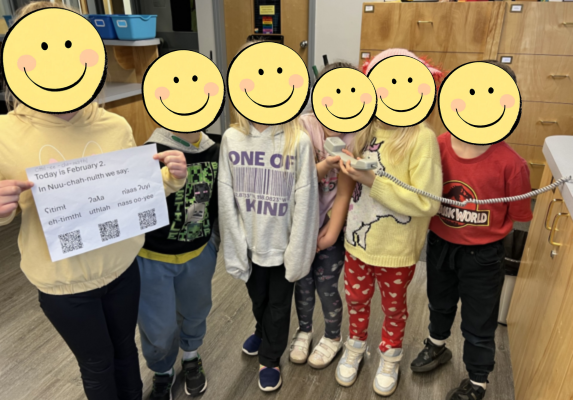
- The First Voices website and apps (specifically the Barkley West and Tseshaht language dialects). These language websites helped me in researching and pronouncing words that my students were interested in (animals, counting, simple phrase, etc). I used these to build a digital morning calendar that imbedded Nuu-chah-nulth language and made QR linked pages for my students to use while making weekly announcements for the school.
- Adobe Creative Cloud. I learned how to create my own Nuu-chah-nulth math games using Adobe.
Connections: I connected with our school district’s Cultural Language Worker to help develop a place-based water unit. I also connected with our school district’s alternative learning school where there are a few land based programs with high school aged youth.
Personal Growth: For our school districts Indigenous Focused Professional Development Day, I presented my first session as a teacher leader where I shared some of the practical ways I have been including Indigenous learning in my practice.
Taking Action: Here is a highlight of the learning that my students did over the year:
-Each student had a week of leading our morning calendar routine which included Nuu-chah-nulth language (months, days of the week, counting, animals)
-In pairs or small groups, students had multiple opportunities to start our weekly announcements in Nuu-chah-nulth. They introduced themselves and shared the date.
-Students played various math games that practiced saying Nuu-chah-nulth numbers (4 in a row, matching, etc)
-During our water unit we learned about the traditional names of the important bodies of water around our community
-We learned our district song and the meaning behind it
-We had a fieldtrip to Kleecoot (Sproat Lake) where we paddled in č̓apac (canoes), saw and listened to the traditional story about the kakaw̓in petroglyphs, played group games, participated in small group language lessons and shared a meal with students and staff from the alternative school. Students tried upsquii (smoked salmon), BBQ salmon, oysters, prawns, fry bread and veggies.




Checking:
Yes, I believe that the NOIIE project made a big difference in my classroom and school. Here are some examples:
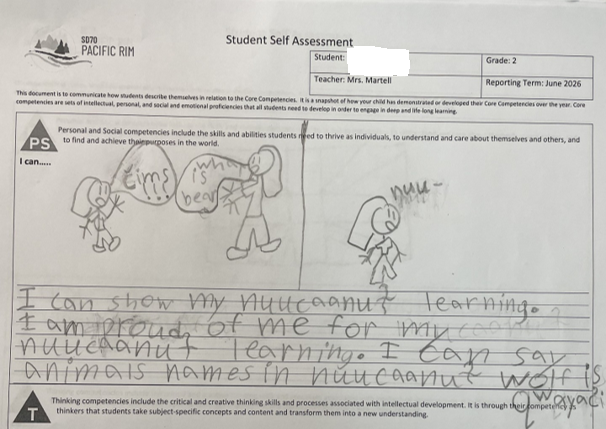
- My students made various connections to our Nuu-chah-nulth learning in their Core Competencies.
- They were very eager to get additional opportunities to do the weekly announcements.
- I have heard from multiple families about my students bringing their language learning home and sharing it with them and their siblings.
- I got to observe the joy on the faces of my students who identify as indigenous when they saw their nation’s emblem on our calendar.
- Many of my students shared that our field-trip was the best one they have ever had (yes, they are only in Grade 2!), but I am positive that it will be a highlight of their elementary years.
I am very happy with the outcome on my project this year.
Reflections/Advice:
Next year, I hope to develop a connection with the Land-Based Learning teacher at the alternative school. During our fieldtrip there were many positive connections and leadership opportunities that were made between the younger and older students–I am interested in developing a year long connection with a group and seeing the growth an connection between the classes.
Advice for others: Go with your passion–you being invested in your project will make all the difference! Don’t be afraid to reach out to district and community resources. Push yourself–presenting during the Professional Development Day was something I never thought I would do, but it was a great experience that I would do again.