
I. General Information
School Name: Aspenwood Elementary
School District: SD#43 Coquitlam
Inquiry Team Members: Lauren MacLean (lmaclean@sd43.bc.ca)
Kaylie Deane (kdeane@sd43.bc.ca)
Inquiry Team Contact Email: lmaclean@sd43.bc.ca
II. Inquiry Project Information
Type of Inquiry: Nature Schools Network Case Study
Grade Levels Addressed Through Inquiry: Primary (K-3)
Curricular Areas Addressed: Applied Design, skills & Technology
Focus Addressed: Core competencies (for example, thinking, communication, personal and social), Land, Nature or Place-based learning
In one sentence, what was your focus for the year? To deepen learners’ connection to place through imaginative outdoor play, nature journaling, and meaningful experiences in our school garden classroom.
III. Spirals of Inquiry Details
Scanning: Through observations, conversations, documentation, and reviewing student work, we noticed that while our school garden classroom was being used regularly by our class, many students across the school had limited opportunities to access the space. We wondered how we could create an invitation for more learners to engage with the garden and how outdoor experiences might support imagination, storytelling, communication, and creative expression.
We listened carefully to learner voices through discussions, observations, photographs, and nature journal entries. Students consistently expressed joy when given opportunities to create, build, imagine, and collaborate outdoors. They shared stories, invented games, created recipes, and transformed natural materials into meaningful play experiences.
The First Peoples Principles of Learning informed our scanning process, particularly the understanding that learning is holistic, experiential, relational, and connected to place. We also drew upon OECD learning principles by valuing learner agency, engagement, and the social nature of learning. By observing learners in authentic outdoor contexts, we gained a deeper understanding of how play, imagination, and connection to the land supported learning in ways that were not always visible indoors.
Focus: We chose to focus on increasing learner engagement, creativity, communication, and connection to the school garden through the addition of a mud kitchen and the use of nature journals.
We hoped learners would spend more time outdoors, develop stronger relationships with the garden space, engage in imaginative and collaborative play, and transfer their outdoor experiences into meaningful documentation, reflection, storytelling, and inquiry through their journals.
Hunch: Our hunch was that the physical design of a learning environment influences how learners engage with it. While our garden classroom offered opportunities for observation and exploration, we wondered if adding a more open-ended and interactive play structure would invite deeper engagement and attract a wider range of learners.
We also wondered whether students needed more opportunities to document and revisit their experiences. We believed that providing individual nature journals could help learners make their thinking visible, deepen their observations, and strengthen the connection between outdoor experiences and literacy, art, inquiry, and reflection.
We also wondered if school culture and adult perceptions around outdoor play sometimes limited opportunities for learners to engage in imaginative, messy, and creative experiences outdoors.
New Professional Learning: As part of our inquiry, we explored professional learning related to outdoor play, learner agency, documentation, place-based learning, and risky play.
One valuable resource was Embracing Risky Play in Schools by Megan Zeni and Mariana Brussoni. This resource supported staff conversations around the benefits of outdoor play, learner autonomy, school culture, and creating environments that encourage creativity, problem-solving, and resilience.
We also engaged in professional dialogue with colleagues, shared student documentation and journal examples, and invited staff to observe the garden classroom in action. These opportunities helped build a shared understanding of how outdoor environments can support learning across curricular areas while fostering social-emotional development and learner well-being.
Taking Action: Using grant funds, we purchased lumber and materials to design and build a mud kitchen for our school garden classroom, as well as nature journals for students.
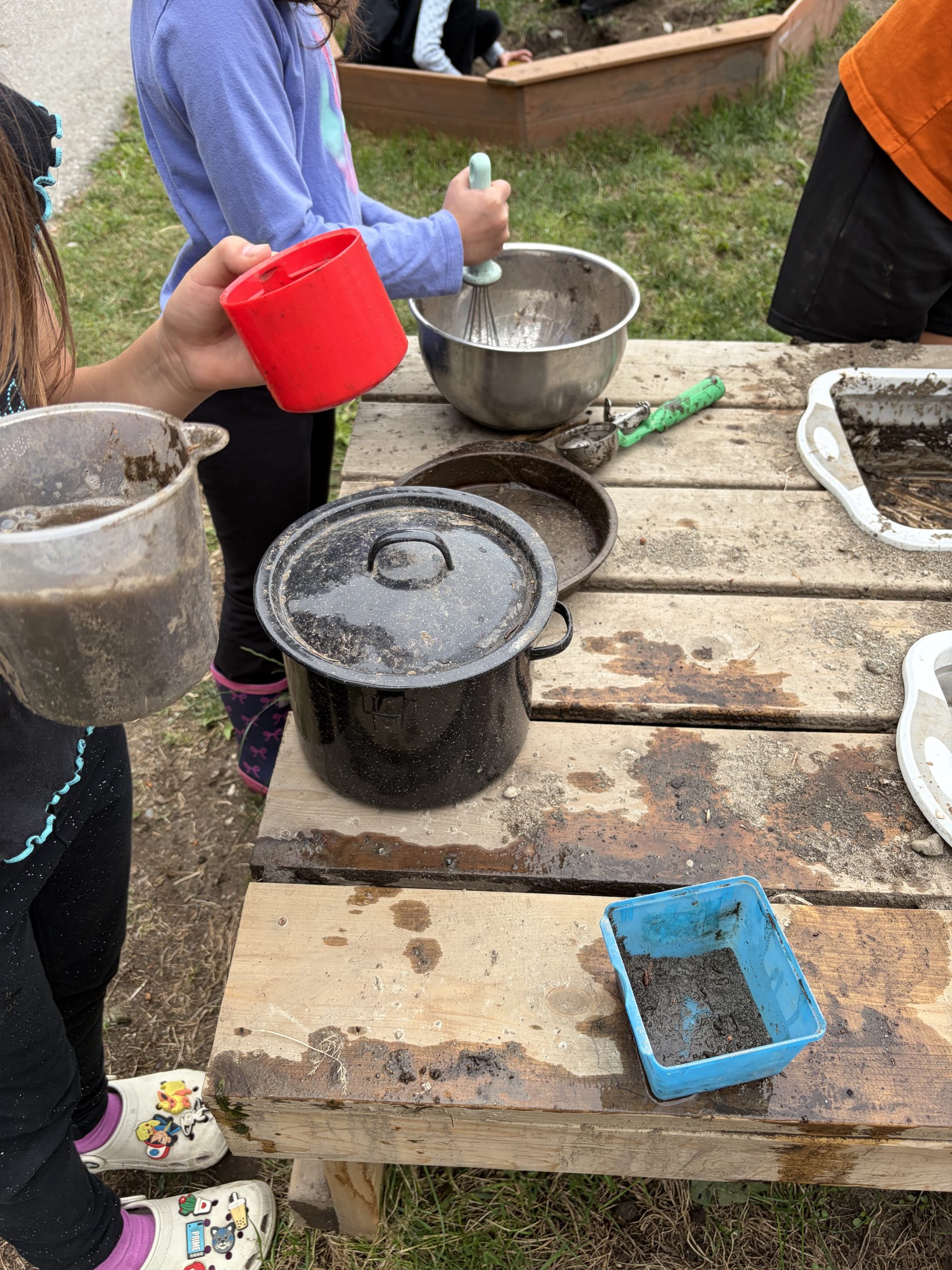
Students participated in the design process by discussing ideas, researching mud kitchens, and helping to plan how the space could be used. Together, we built a mud kitchen that encouraged open-ended play, collaboration, storytelling, experimentation, and creativity.
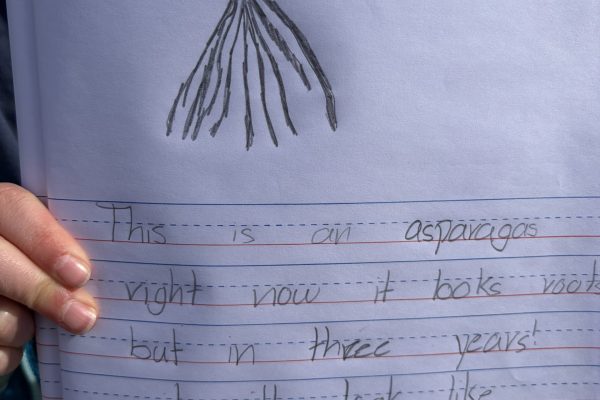
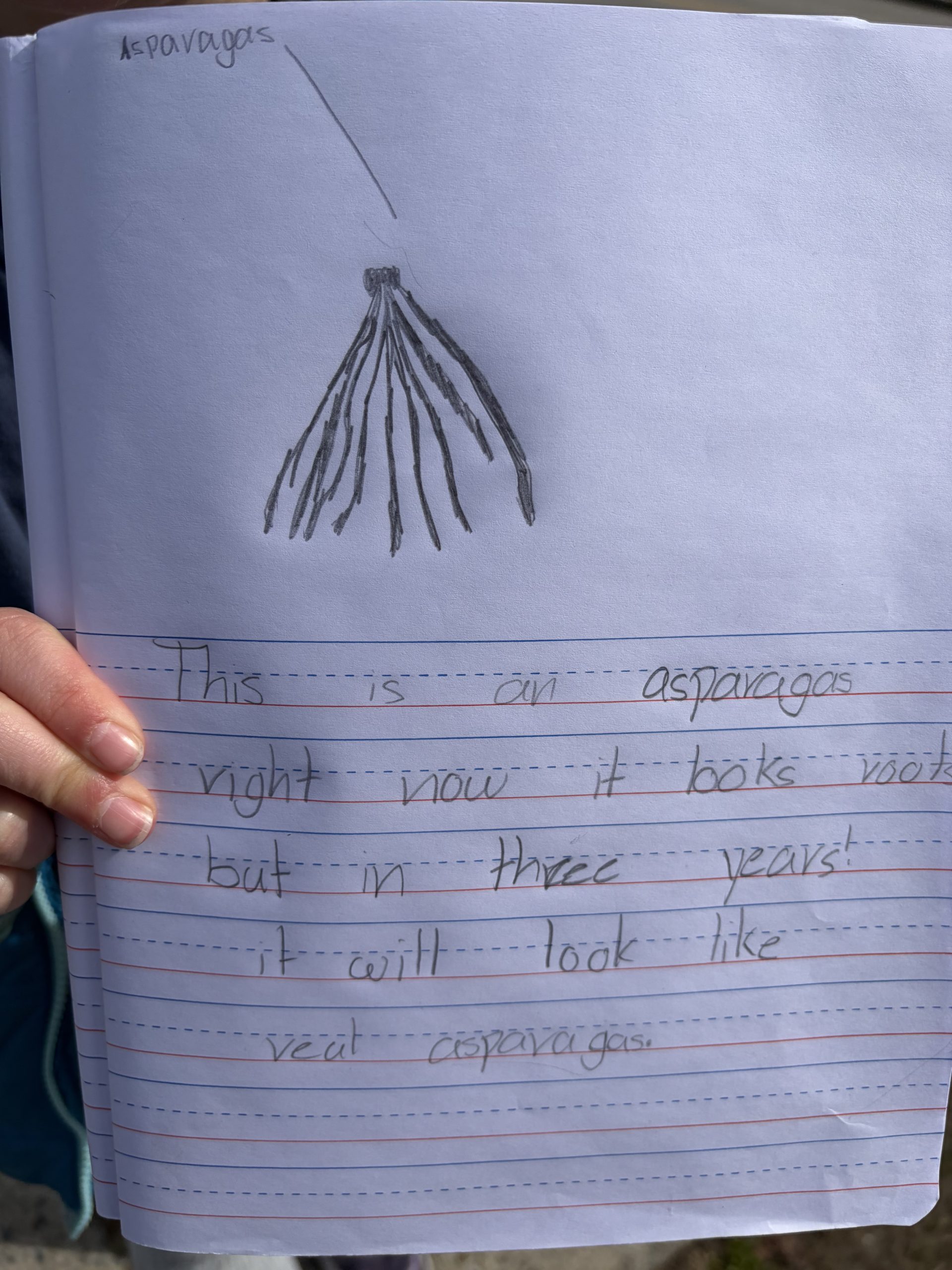
Nature journals became an ongoing tool for documentation and reflection. Students regularly recorded observations, questions, stories, drawings, poems, comic strips, lists, and artistic representations of their outdoor experiences. Journals allowed learners to revisit experiences, make connections over time, and express their learning in personally meaningful ways.
The mud kitchen became a central feature of the garden classroom and was intentionally left open-ended to encourage imagination and learner agency. Students created recipes, restaurants, potions, stories, and dramatic play scenarios while working collaboratively with peers.
We also welcomed other classes into the space and shared the learning opportunities with colleagues throughout the school.



Checking: The impact exceeded our expectations!!
Initially, I anticipated that my own classroom would be the primary user of the mud kitchen, as the school garden had largely been used by our class for the previous four years. Instead, the mud kitchen transformed how the entire school engaged with the space.
All three kindergarten classes began visiting the garden regularly, often one to three times per week. The garden became a vibrant and highly utilized outdoor learning environment that attracted learners from across the school. We observed increased collaboration, communication, imaginative play, problem-solving, and joy among students using the space.
Our nature journals also provided powerful evidence of growth. When comparing journal entries from September to those created later in the year, we observed significant increases in detail, observation skills, curiosity, personal connection, and learner voice. Students demonstrated their learning in unique ways, including drawings, poetry, storytelling, questions, lists, labelled diagrams, and comic strips.
Evidence for change included:
Student nature journals
Photographs and documentation
Teacher observations
Increased use of the garden by multiple classes
Student conversations and reflections
Increased engagement and time spent outdoors
We were extremely satisfied with the impact of the project and the unexpected school-wide reach of the mud kitchen.
Reflections/Advice: This inquiry reinforced the importance of designing outdoor environments that invite play, imagination, and learner agency. One of our biggest learnings was that small changes to a physical space can have a significant impact on school culture. The addition of the mud kitchen transformed the garden from a space that was occasionally visited into a destination that students actively sought out.
We also learned that nature journals can be a powerful tool for documenting growth over time. Looking back through students’ journals revealed not only increased knowledge and observation skills but also stronger personal relationships with the land and greater confidence in expressing their thinking.
Next, we plan to continue expanding opportunities for outdoor learning throughout the school and explore additional ways to connect play, inquiry, literacy, and stewardship in our garden classroom.
Our advice to other schools is simple: start small, trust learner curiosity, and create spaces that invite imagination. Open-ended outdoor environments combined with opportunities for reflection and documentation can lead to rich, authentic learning experiences that extend far beyond what was originally envisioned.