
I. General Information
School Name: Thompson Elementary
School District: SD#38 Richmond
Inquiry Team Members: kvines@sd38.bc.ca
A. Ridley
S. Bone
J. Perez
D. Vargas Cruz
Inquiry Team Contact Email: kvines@sd38.bc.ca
II. Inquiry Project Information
Type of Inquiry: Nature Schools Network Case Study
Grade Levels Addressed Through Inquiry: Primary (K-3), Intermediate (4-7)
Curricular Areas Addressed: Language Arts – Literacy, Language Arts – Oral Language, Language Arts – Reading, Language Arts – Writing
Focus Addressed: Local Indigenous Knowledges, Literacy, Land, Nature or Place-based learning
In one sentence, what was your focus for the year? Growing our community’s connection with the land, learning about local indigenous plants, planting local indigenous plants to attract pollinators (re-wilding) and making our courtyard spaces more useful.
III. Spirals of Inquiry Details
Scanning: We found that most students were not able to name more than one plant when walking around the school property. Students shared that they didn’t realize that they were allowed to go into the 3 courtyard spaces at our school. Students shared that they wanted to help create a caring community – where we consider what’s best for ourselves, each other and our place. We worked closely with one of our district Indigenous consultants to guide our learning and honour the wisdom of Indigenous knowledge.
Focus: These actions support our school’s learning focus in fostering an overall sense of belonging and embodying our Thompson CARES model of showing care for self, others and place. The outdoor courtyards are also being used in a well-way for students who benefit from self-regulating activities and having these student designated spaces is proving to be very helpful for students throughout the grades.
Hunch: Our hunch was that the ‘untouchedness’ of the courtyards found at the centre of our school, contextually inside the walls of our learning spaces was a metaphor for and invitation to slow down, take ownership and learn more deeply about the interior experience for overall wellness and connectivity to ourselves and our place and thus, foster an overall sense of community while leaning into the question of “what is nature teaching us and why is it important?”
New Professional Learning:
- Many Staff leaned into the book – Held By the Land: A Guide to Indigenous Plants for Wellness by Leigh Joseph for on-going learning and insights.
- We engaged in school-wide professional development at VanDusen Gardens to learn about local Indigenous plants from local experts.
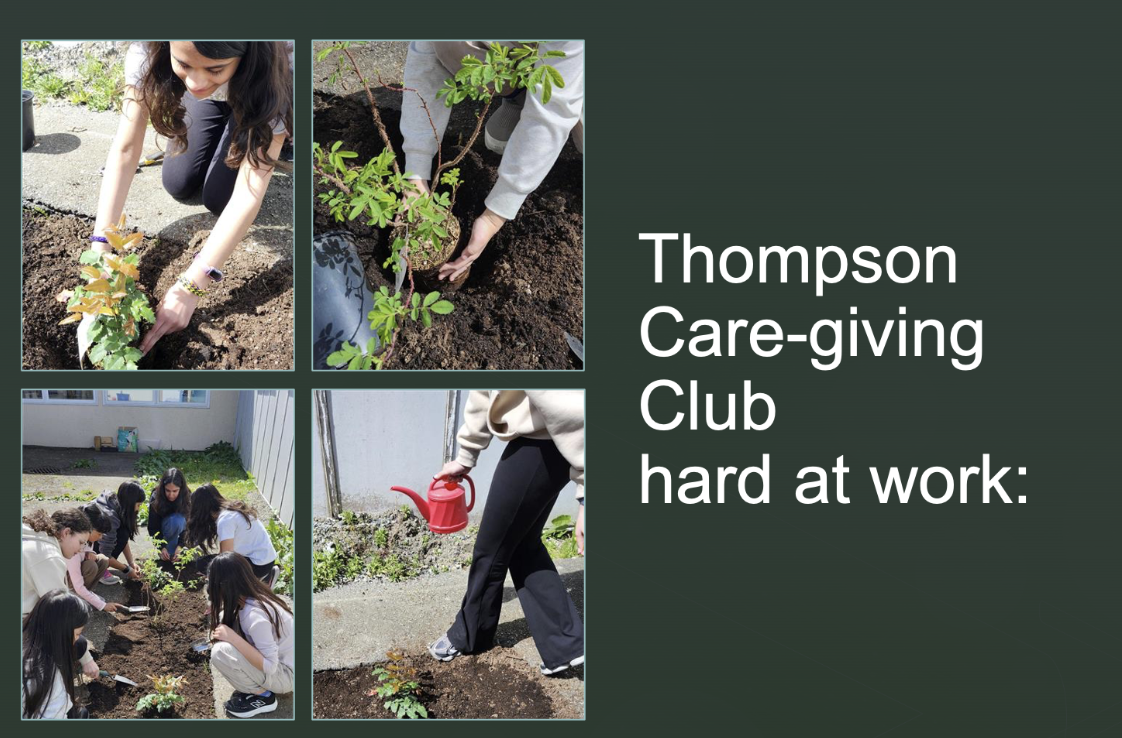
- We learned throughout the year from the district teacher consultant, who was involved in supporting the professional development with each grade group and our Thompson Care Giving Club (a student initiated club of grade 4, 5 and 6 students).
Taking Action:
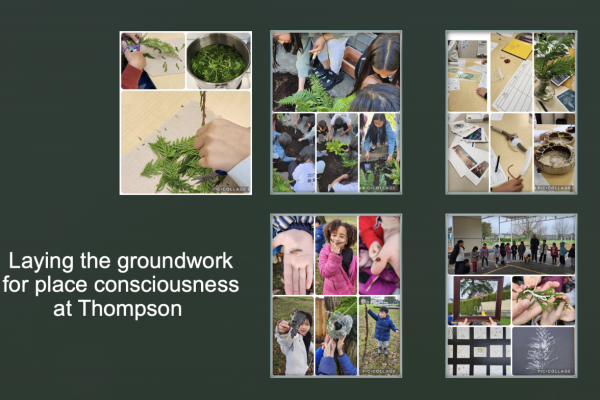
- We helped the school population learn about local Indigenous plants.
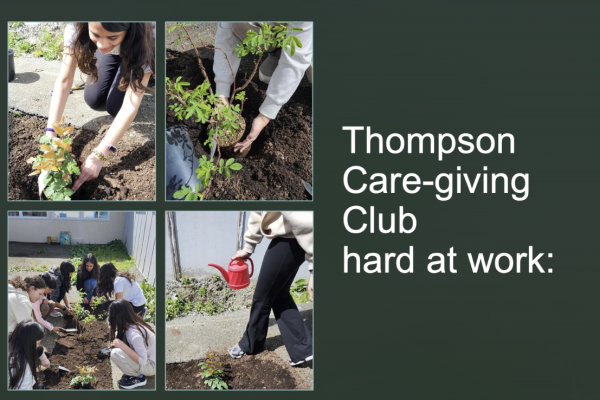
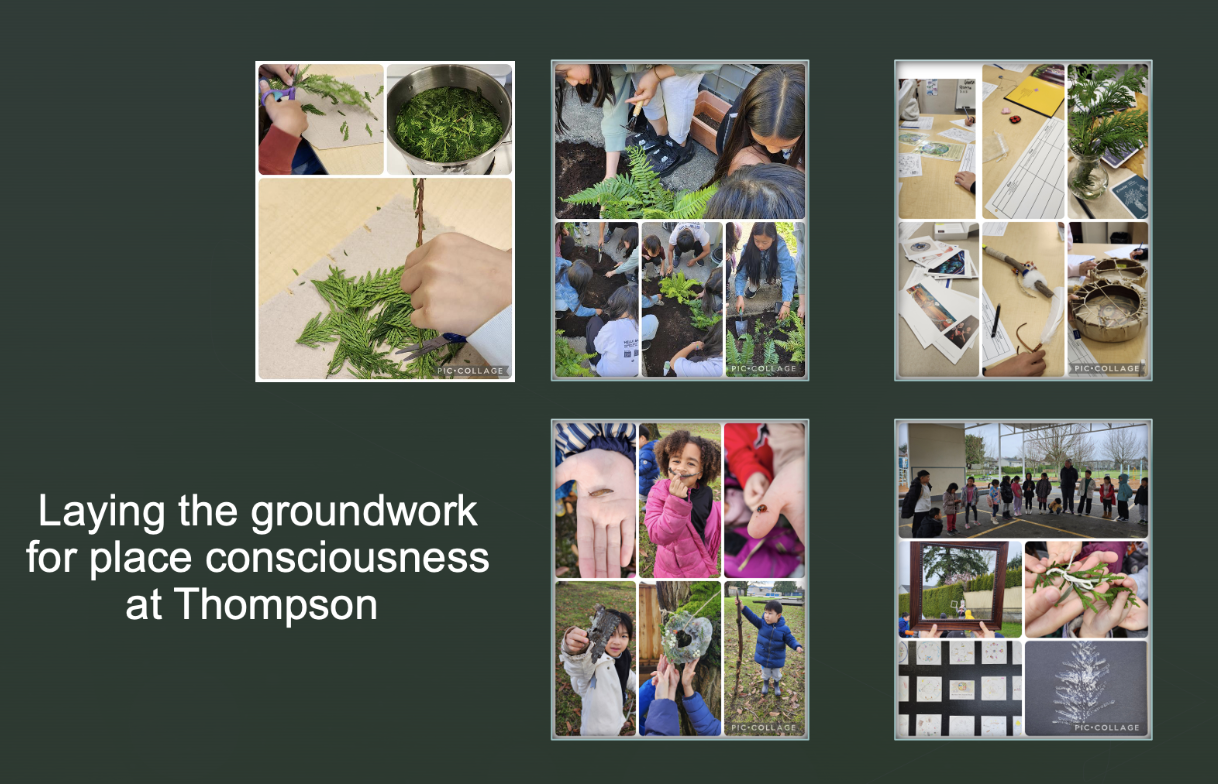
- We planted local indigenous plants to attract pollinators (re-wilding) our courtyard spaces with Oregon Grape, Salal, Wild Rose, Kinnikinnick, and Sworn Fern.
- We made our courtyard spaces more useful.
- We supported the Thompson Care Giving Club (initiated by student leaders) who showed care for our space by planting, watering, weeding and organizing the outdoor spaces. They also built a shelving unit and re-finished a bench and led a school-wide clothing drive to support a local organization and families while collecting materials to support 150 families.
The grade 1/2 classes:
- Ongoing work surrounding gratefulness for place and reciprocity
- Nature journalling
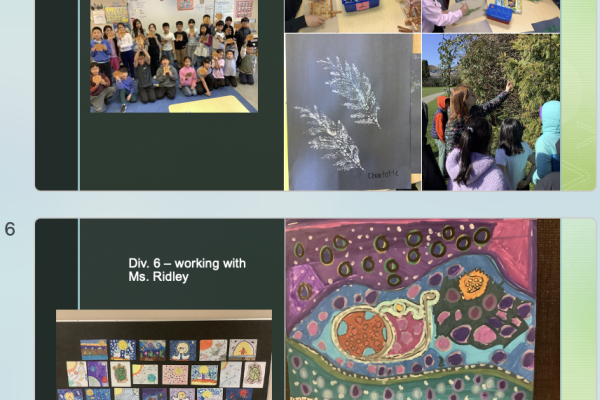
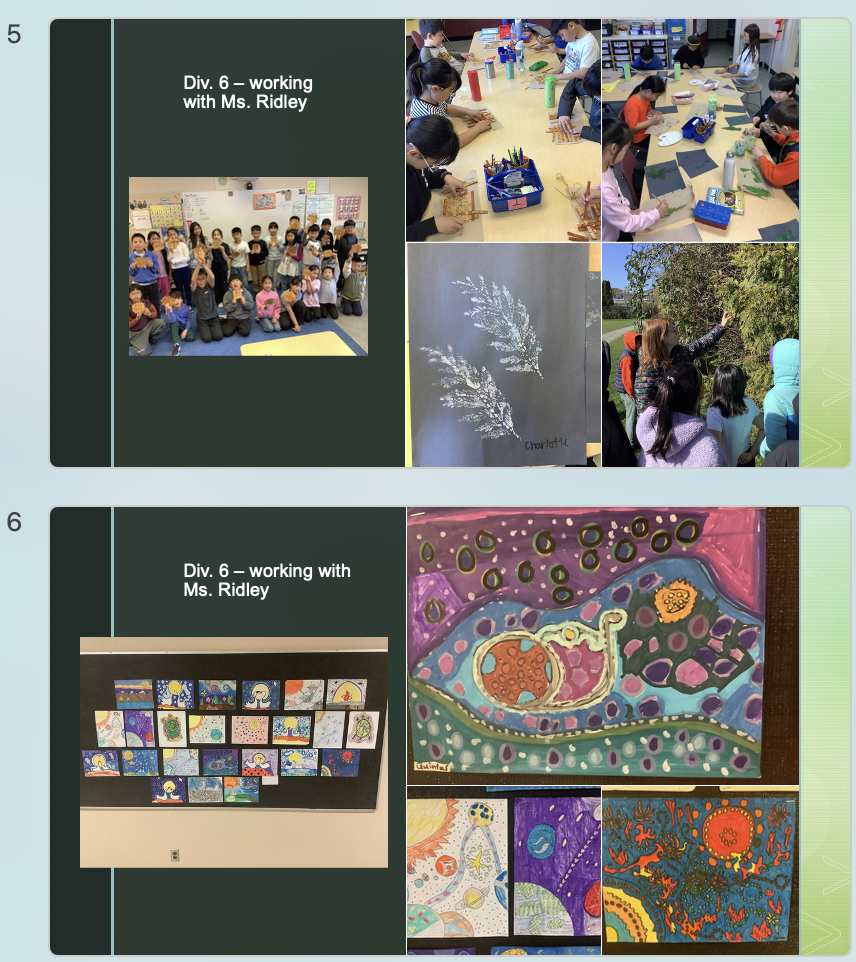
- Cedar investigations – cedar tea tasting and cedar print making
- Investigations into seasonal rounds and their importance for Cost Salish peoples’
- Connections with Coast Salish moon names with seasonal rounds – discussions surrounding why these connections exist
The Grade 6/7 and 2/3 buddy classes:
- Discussions and investigations surrounding place and local Indigenous plants and invasive species
- Facilitated research around local Indigenous plants that have been turned into plant cards and will be published in book format
- Connected indigenous teacher consultant for a weaving project
- Coordinated an invasive species pull and talk with City of Richmond staff and support
Grade 3/4 classes:
- Teachings around the word Indigenous and what it means
- Teaching about cedar – made cedar tea and prints
- Discussions about who was here before us, discussion of what our place was like in the past, and the Indigenous groups who lay claim to the land we live on
- Exploring the Musqueam place names map and listening to language – what does language/place names tell us about culture and what is important – world views
- Oral storytelling – information sharing about oral traditions and how they work for Indigenous cultures
- Little Bear’s Spirit Quest – re-telling of a specific part and explanation of the lesson
- How the Moon Came to Be – connecting Indigenous knowledge to western science – retelling of a part with art in the style of Leah Marie Dorian
- Seasonal rounds and connection to moon names in Indigenous cultures – seasonal round art of their own lives – what is important in the seasons of your life?
- Exploration of different moon names in different Coast Salish nations – creation of their own moon art, connected with a month and outdoor activity – just like Coast Salish moons
- Introduction to Wilfred Buck Indigenous astronomer and star lore specialist – watched a video of him telling the Achakapis – Little Spirit story and then retold the lesson with loose parts
Held our first school-wide Winter Solstice Event that was the culmination of an art installation in response to the provocation “what is nature teaching us and why is it important?” Students, in their family teams, created lanterns, and then we walked as a school to celebrate nature’s teaching and shining light in darkness.
We also held our first school wide walk-a-thon to celebrate earth day and honour the land and indigenous teachings.
These initiatives and fundraisers, collectively raised nearly $10 000.
Checking: The courtyards are being used, and with growing frequency. They are loved. The student leaders have a growing sense of purpose and engagement, beyond the classroom expectations.
Staff and students shared their gratitude for the learning and the teachings in a celebratory assembly in recognition of National Indigenous Month (in June) and recognized the value and importance of learning alongside our district indigenous teacher consultant.
There is momentum and still a lot of room to further and grow.
Reflections/Advice: This is important and meaningful work that takes time and patience and trust in the process. As noted above, there is growing momentum and our hopes are to build on the foundation that is being established with the intent to increase land-based pedagogy and intentional outdoor learning from and with the land.
We are excited about the possibility of increasing our connection and appreciation for the Fraser River, which is a 10-minute walk from our school, alongside the important work and expedition of the Fraser River Keepers who presented at our school in June. We see this as a possibility to further our on-going learning while recognizing the necessity to be stewards expressing utter care for our place, each other and ourselves.