
I. General Information
School Name: Smithers Secondary School
School District: SD#54 Bulkley Valley
Inquiry Team Members: Julie Krall: jkrall@sd54.bc.ca, Helen Erickson: helen.erickson@sd54.bc.ca, Talia Choy: talia.choy@sd54.bc.ca, Matthew Perry: matthew.perry@sd54.bc.ca, Karlie Lynch: karlie.lynch@sd54.bc.ca, Travis Hebert: travis.hebert@sd54.bc.ca .
Inquiry Team Contact Email: jkrall@sd54.bc.ca
II. Inquiry Project Information
Type of Inquiry: Indigenous Education Impact Initiative
Grade Levels Addressed Through Inquiry: Secondary (8-12)
Curricular Areas Addressed: Career Education
Focus Addressed: Local Indigenous Knowledges, Land, Nature or Place-based learning
In one sentence, what is your focus for the 3-year cycle? The focus of this project is restructuring the delivery of the CLE and CLC courses to prioritize a successful bridging to post-graduation life.
III. Spirals of Inquiry Details
Connections to Year 1: The team completed an end of year scanning (exit survey) with eight graduating students in May 2025, to capture their views on their readiness for post-secondary life and to determine their opinions on whether their high school experiences have helped prepare them for life after graduation. Students’ responses reinforced our hunches at the beginning of our project cycle. They shared that while school has helped them build some of their skills and competencies in areas like financial literacy, self care and wellness, and problem solving, they were still uncertain about how school learning connects to/is relevant in the real world. In response to the questions: how can high school better prepare you for the real world and what types of learning experiences would you like to have included at school? ALL students who were interviewed agreed that they valued hands-on, experiential, community-based and career-connected learning opportunities (for example, trades/shop programs, financial literacy—saving money, budgeting, renting a home, buying a car, meeting with employers, understanding job expectations, learning how to apply for employment). During our year one, we focused on redesigning learning experiences focused on employment and financial literacy. For example, we organized an employer living library that connected students with employers and WorkBC representatives directly. Students received guidance on employment opportunities, application process, eligibility requirements and resume writing from this event. At least two students gained employment from this experience.
New Educator Professional Learning: This year, our team explored several new areas of professional learning centred on community engagement, place-based learning and practical life skills development for our students. A key focus was deepening our understanding of the health/wellness, housing, transportation, and employment supports, services and resources available within our community and how to access and navigate these. By actively planning and conducting a community services inventory and collaborating with local organizations ahead of time, we were able to navigate these services ourselves before guiding students through them. This hands-on approach strengthened our ability to authentically teach and scaffold these skills, and facilitate connections between our students and these community organizations. Collaborating directly with these community members was central to our learning. Working alongside those directly responsible for delivering housing, employment and other services helped our team gain valuable insights into how these systems operate and how they can best support our students. In many ways, student learning became our learning–through these shared experiences, we were building understanding together. Building our own and our students’ connections to place was an especially rewarding aha moment for our team, in that we came to better appreciate how rich and resourceful our community is and how critical it is for our students to be able to access and engage with it.
In conclusion, while in year one, we began identifying community connections, this year we strengthened those relationships and embedded them more meaningfully into student learning. The most helpful resources were community partners themselves, as well as experiential learning opportunities that allowed both our team and our students to engage directly with real-world systems.
Taking Action: This year, our team decided to focus on place-based learning. We conducted several community inventories. We followed up each inventory with classroom activities that helped students to identify the importance and significance of the physical features and/or human designed/operated features. We noticed that students developed keen observational skills and critical thinking skills. They became better at identifying features of the landscape and became increasingly comfortable entering community spaces such at the Legion. Students became familiar with community services and demonstrated more confidence accessing services for medical, financial, and employment purposes.

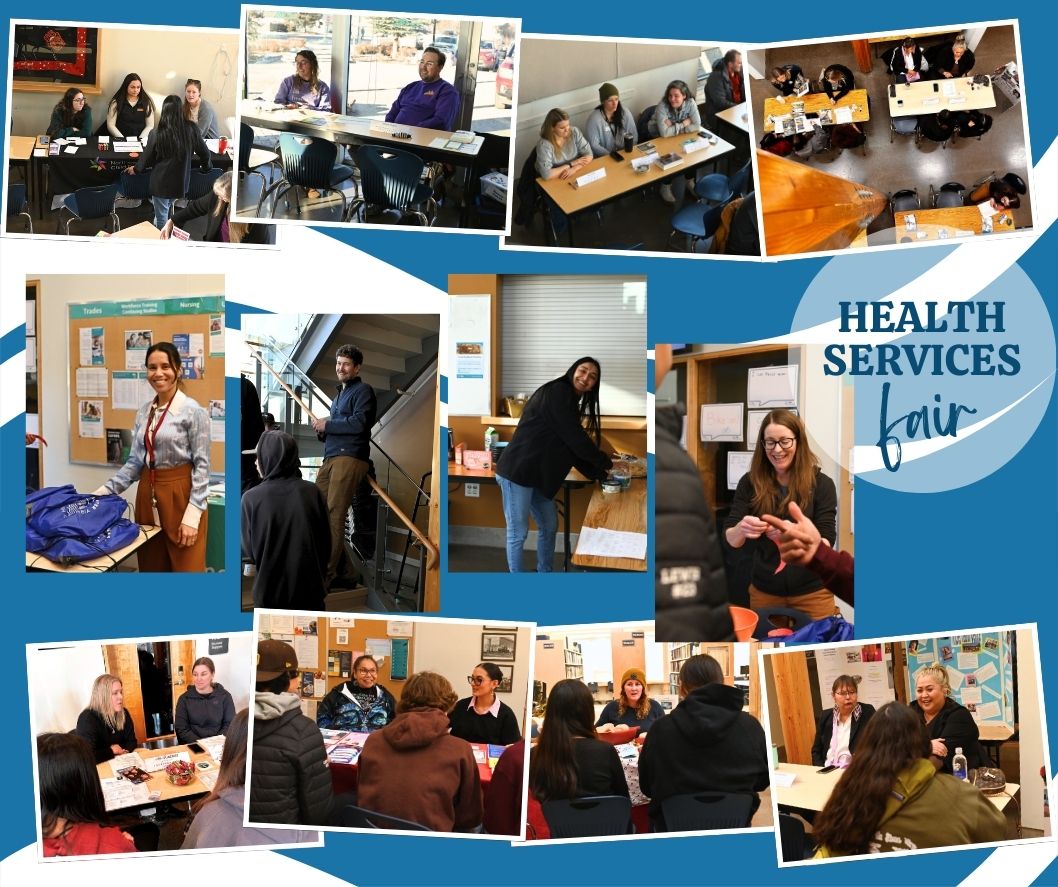
Photo Description: The pictures were taken at Coast Mountain College in January 2026 during our health services fair. Students met with a wide range of service providers from Witset, Smithers and Telkwa. Students had an opportunity to choose the service providers they wanted to speak to and they had 5-10 mins to sit down and speak with the representatives to learn more about the services provided by their organization.
Reflections for Year 2: As we planned, coordinated and integrated more community based/experiential learning opportunities for our students this cycle, we found that engaging with this work ourselves–such as orienting to, and building relationships with community resources–was essential. It enabled us to authentically and effectively teach our students how to navigate the very community systems they will encounter after high school. We also became well acquainted with the rigors/challenges of planning these events/learning experiences, including shifting timelines to accommodate competing demands on community partners’ time, and occasional last-minute cancellations or changes. Despite this, most community service partners (e.g., housing, health and wellness and finance) were eager to support our students with many expressing a desire to continue this partnership (beyond the project cycle). We noticed that while some of our students were initially reluctant to engage with new/unfamiliar community partners and service spaces, feedback from those who participated in the health services fair and community inventory activities highlighted the value of these experiences. Some students shared that having educator support allowed them to enter and navigate these spaces more confidently, ask questions and interact with professionals more than they would have independently. For some of them, it was the first time accessing essential community service spaces, particularly in health and wellness. These insights reinforce the value of these authentic, community-based learning opportunities in fostering the confidence and connections students need to engage with their wider community beyond high school.
Plans for Year 3: Year 3 will build on the foundation established in Years 1 and 2, which focused on supporting students to create a comprehensive and personalized graduation transition plan. This year emphasized synthesizing prior learning into a cohesive grad plan and portfolio. The grad plan and portfolio will integrate learning and resources from the four key areas that have characterized place/community based learning opportunities planned and executed over the last two years: health and wellness, employment, financial literacy, and housing and transportation. In year 1 (grade 10), students participated in the employer living library and financial literacy learning. They developed industry-appropriate resumes, explored career pathways and eligibility requirements through employer interactions, and connected with financial professionals to learn about banking, investments, and money management. Students also worked with their teachers to establish criteria/goals for school-based success, including attendance, engagement, grades, and course selection/planning (this is done every year and revisited/revised throughout the year). In year 2 (grade 11), students reviewed and refined their grad plans and selected artifacts of their learning journey for their portfolios. Artifacts include resources and experiences from housing tours, community inventories, and the health services fair. Year 3 (grade 12) will focus on identifying gaps from the previous two years and providing targeted support to help each student complete their grad transition plan. Students will also continue to build and refine their portfolios, ensuring they include practical, personalized resources for life beyond high school. By the end of Year 3, each student will have a concrete, individualized portfolio they can use to support their next steps after graduation.